
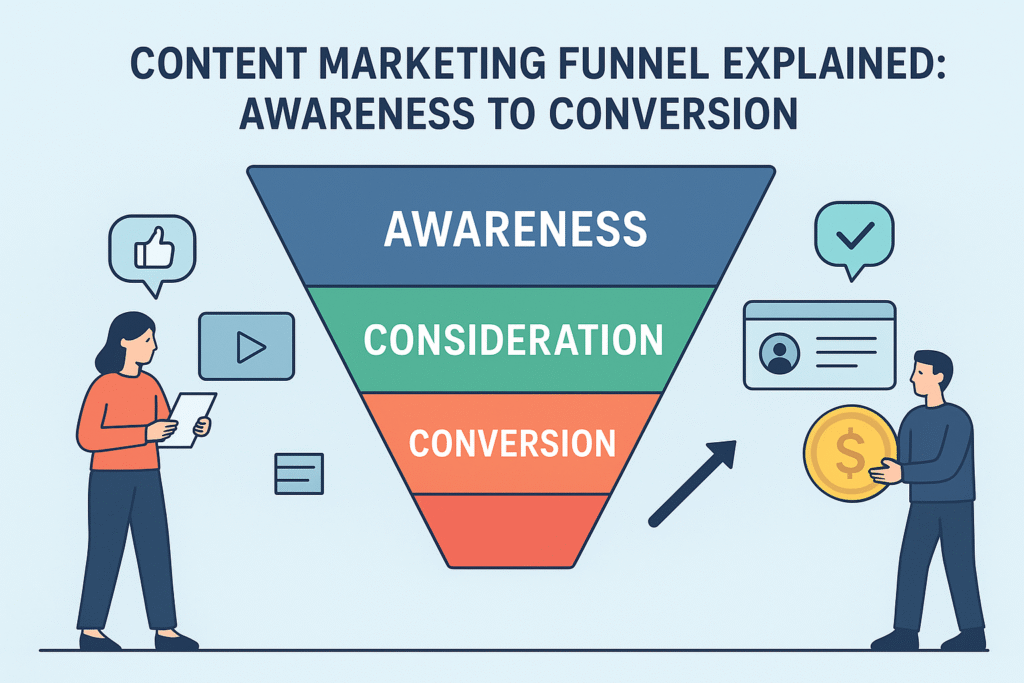
Content marketing has evolved into a cornerstone of modern digital strategy. Businesses today must do more than just sell; they must educate, inform, and build trust with their audience. Understanding the content marketing funnel is crucial for designing campaigns that guide potential customers from their first interaction to final conversion. In this blog, we’ll explore each stage of the funnel awareness, consideration, and conversion while incorporating best practices like search engine optimization to enhance visibility and engagement.
What is a Content Marketing Funnel?
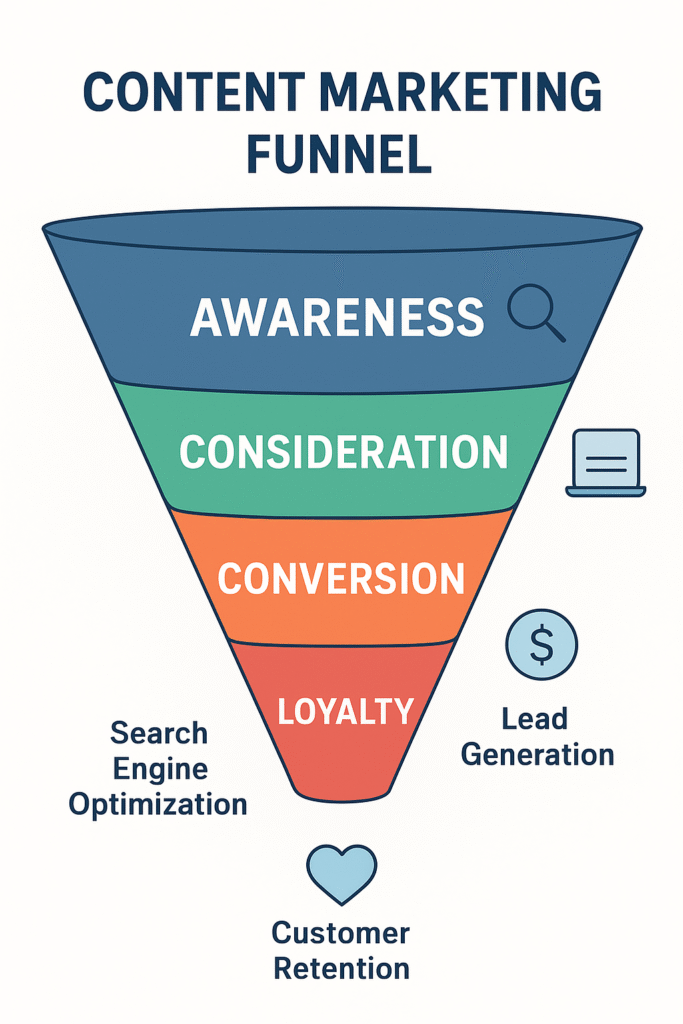
A content marketing funnel is a strategic framework that maps out the journey a potential customer takes from discovering a brand to making a purchase. It breaks down the customer experience into three main stages: awareness, consideration, and conversion. Each stage requires unique content and marketing tactics to effectively guide the user along their journey.
Think of the funnel as a roadmap. At the top, there is a broad audience unfamiliar with your brand. As they move through the funnel, they engage with your content, gain trust, and eventually convert into customers. To achieve this, marketers leverage search engine optimization, targeted content, and data-driven strategies.
Why the Funnel Matters
Without a well-structured content marketing funnel, businesses risk losing potential customers at every stage. Random content posting may generate traffic, but it seldom leads to conversion. By aligning content with the funnel stages, marketers can ensure every piece of content serves a purpose, whether educating a reader, building trust, or prompting a purchase.
Example: A software company writing blog posts about “common industry challenges” can attract a broad audience at the awareness stage. Later, case studies demonstrating product effectiveness target the consideration stage, and finally, free trials or demos push the audience toward conversion.
Awareness Stage: Attracting the Right Audience
The awareness stage marks the first interaction between your brand and potential customers. Users at this stage are not looking for products; instead, they are seeking solutions, answers, or insights. This is where educational content becomes vital.
Using Search Engine Optimization in Awareness
At the awareness stage, content should focus on providing value while remaining discoverable through search engine optimization. Optimizing blog posts, videos, or infographics for search engines ensures your brand appears when users seek information online.
- Keyword research: Identify queries your target audience frequently searches for.
- On-page SEO: Use meta descriptions, headings, and alt text optimized for keywords.
- High-quality content: Create informative, easy-to-read content that solves problems.
Example: A fitness brand writing about “how to improve cardiovascular health” can optimize the post for relevant search terms. Users searching for health tips may discover the content and associate the brand with credible advice.
Content Types for Awareness
Awareness content is broad and educational. Some effective content types include:
- Blog posts and articles
- Infographics
- Educational videos
- Social media posts
- Podcasts
Each content type can integrate search engine optimization techniques to enhance discoverability. For instance, blog posts optimized with relevant long-tail keywords attract organic traffic, while social media snippets increase brand visibility.
Consideration Stage: Building Trust and Engagement
Once potential customers are aware of your brand, the next step is the consideration stage. At this point, users are evaluating options and seeking more detailed information. Content must now address their questions and demonstrate your brand’s value.
Leveraging Search Engine Optimization in Consideration
Search engines play a critical role in the consideration stage. Content that ranks well can educate and influence decision-making.
- Internal linking: Connect awareness content to deeper guides or case studies.
- Content depth: Provide detailed comparisons, reviews, or tutorials.
- SEO-rich resources: Use structured data, headings, and keyword integration for better visibility.
Example: A SaaS company may create a comprehensive guide comparing different project management tools. By integrating search engine optimization, they ensure users searching for “best project management software” discover their guide.
Types of Consideration Content
Consideration content should guide users toward informed decision-making. Examples include:
- Detailed guides and eBooks
- Product comparisons
- Case studies
- Testimonials
- Webinars
Each piece builds trust. For example, case studies show real-world results, while product comparison guides help users weigh options, increasing the likelihood of conversion.
Conversion Stage: Turning Prospects into Customers
The final stage, conversion, is where prospects take action. This could mean making a purchase, signing up for a trial, or subscribing to a service. At this stage, content should focus on removing barriers and providing a clear path to action.
Optimizing Conversion with SEO
Even at the conversion stage, search engine optimization remains crucial. Optimized product pages, landing pages, and CTAs ensure that users can find exactly what they need when ready to convert.
- Landing page optimization: Clear headlines, persuasive copy, and strong CTAs.
- Keyword targeting: Use commercial intent keywords like “buy,” “subscribe,” or “get demo.”
- Page speed and mobile optimization: Reduce friction in the conversion process.
Example: An online course platform can optimize its landing page for keywords like “best digital marketing course online.” By doing so, users who are actively looking to enroll can easily find and convert on the page.
Conversion Content Types
Conversion content is direct and action-oriented. Common formats include:
- Product pages
- Free trials or demos
- Special offers
- Personalized emails
- Checkout optimization content
Each type emphasizes clarity and persuasion. For instance, a limited-time discount or a free trial can encourage immediate action while testimonials provide social proof.
Integrating Search Engine Optimization Across the Funnel
To maximize results, search engine optimization should be integrated into every funnel stage. Awareness content draws visitors, consideration content builds credibility, and conversion content drives action—all optimized for search engines.
Strategies for SEO Integration
- Keyword mapping: Assign specific keywords to each funnel stage.
- Content updates: Regularly refresh content to maintain search rankings.
- Internal linking structure: Guide users from awareness to conversion content naturally.
- Analytics tracking: Measure traffic, engagement, and conversions to refine strategies.
Example: A digital marketing blog optimized with targeted keywords can move users from reading introductory guides to downloading premium resources, eventually leading to signing up for consulting services.
Real-Life Example of a Content Marketing Funnel
Let’s examine a practical example to understand the funnel in action:
Company: Eco-friendly Home Products
- Awareness Stage: Blog post on “10 Easy Ways to Reduce Plastic in Your Home”
- Consideration Stage: eBook guide on “Sustainable Alternatives for Every Household Item”
- Conversion Stage: Product landing page with eco-friendly household kits, including customer reviews and discounts
By using search engine optimization, each stage attracts the right audience and guides them seamlessly to conversion. Traffic from Google searches at the awareness stage eventually results in product purchases at the conversion stage.
Common Mistakes in Content Marketing Funnels
Even experienced marketers can make errors that reduce funnel effectiveness. Common mistakes include:
- Ignoring SEO: Poor optimization reduces visibility at all funnel stages.
- Creating one-size-fits-all content: Each stage requires unique messaging.
- Neglecting analytics: Without data, refining strategies is impossible.
- Overloading users: Too much information can overwhelm prospects.
By avoiding these pitfalls, marketers can ensure the funnel operates efficiently and drives meaningful conversions.
Best Practices for a Successful Content Marketing Funnel
- Audience segmentation: Tailor content for specific buyer personas.
- Value-first approach: Educate before selling.
- Clear CTA at each stage: Guide users naturally toward conversion.
- Consistent messaging: Maintain brand voice and tone throughout.
- SEO optimization: Integrate keywords like search engine optimization strategically across all content.
Example: A health supplement brand creating a blog series on nutrition, then offering a free trial, and finally promoting subscription plans illustrates how the funnel nurtures users at each stage.
Measuring Content Marketing Funnel Success
Data-driven insights are crucial for optimizing the funnel. Key performance indicators include:
- Website traffic and engagement
- Lead generation metrics
- Conversion rates
- Bounce rates
- Time on page
By tracking these metrics, marketers can identify bottlenecks and adjust content strategy for better results. Implementing A/B testing for headlines, CTAs, and landing pages further enhances conversions.
Conclusion: Driving Growth Through a Content Marketing Funnel
The content marketing funnel is more than a theoretical model; it’s a practical roadmap for guiding prospects from awareness to conversion. By aligning content with each stage, integrating search engine optimization, and using analytics to inform strategy, businesses can attract, educate, and convert their target audience efficiently.
Investing in a well-structured funnel ensures that every piece of content serves a purpose. Brands can build authority, increase trust, and ultimately drive revenue. Whether you are a startup, small business, or established company, understanding and implementing a content marketing funnel is essential for sustainable growth.
Example Recap: Eco-friendly Home Products successfully leveraged blogs, guides, and landing pages, optimized with search engine optimization, to turn casual visitors into loyal customers, illustrating the funnel’s real-world impact.
To know more about Digital Marketing Click Here.